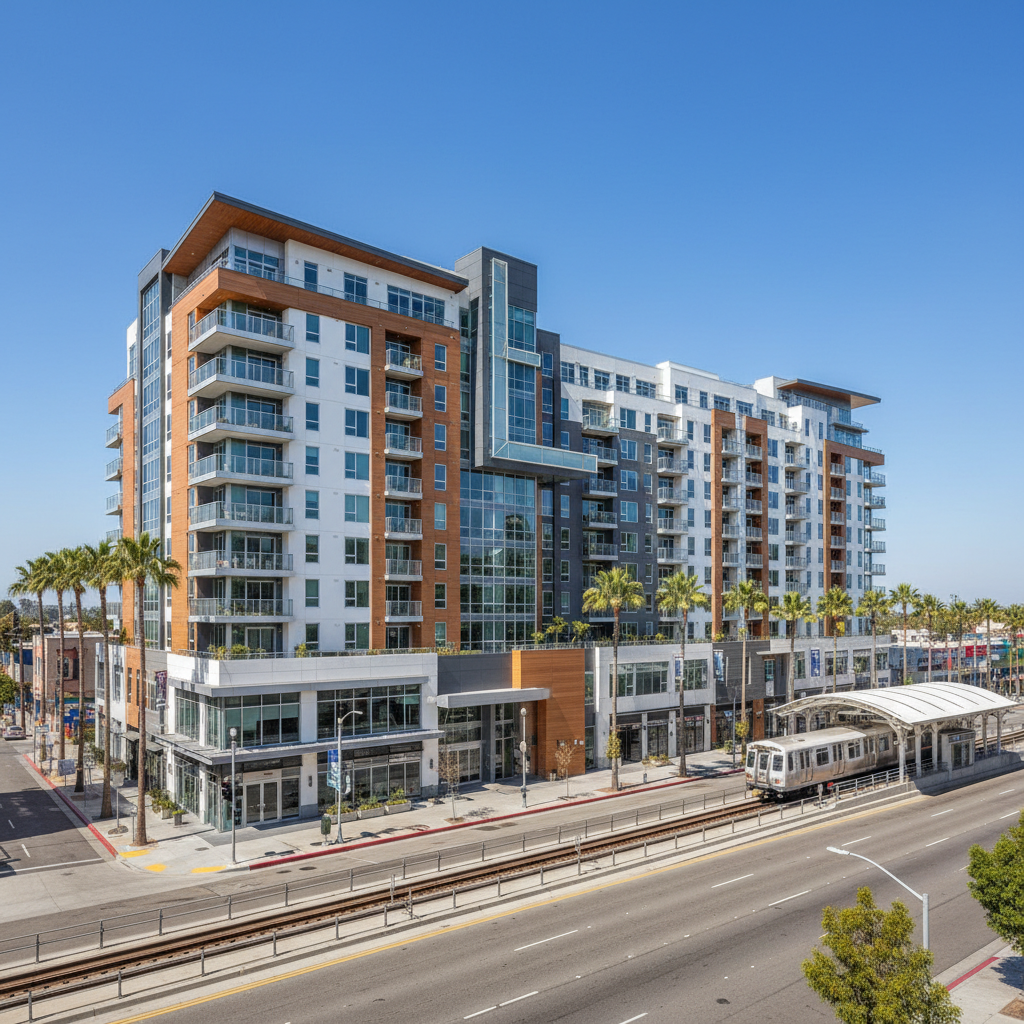
The Steel-Track Stimulus: Harvesting Residential Yield from Underutilized Transit Parcels
As we navigate the first quarter of 2026, the Southern California real estate landscape is undergoing a tectonic shift. For decades, the region’s investment strategy was defined by suburban sprawl and the dominance of the single-family home. However, with the California Association of Realtors reporting that a staggering 82% of households can no longer afford a median-priced home, the market is pivoting toward a more concentrated, accessible, and high-yield model: Transit-Oriented Development (TOD).
The catalyst for this shift is what we at McIntire Kingstone call the 'Steel-Track Stimulus.' This isn't just about big government infrastructure; it’s about a massive influx of residential potential on land that was previously overlooked. A landmark study by Enterprise Community Partners has recently identified approximately 3,000 parcels of land owned by California transit agencies with the potential to support 240,000 new housing units. For the savvy investor in Los Angeles, Orange County, or the Inland Empire, this represents a generational opportunity to capture the 'Halo ROI' generated by these transit hubs.
1. Analyzing the Enterprise Community Partners Study: The Southland Goldmine
The Enterprise Community Partners study has sent shockwaves through the California investment community by quantifying exactly how much underutilized land sits adjacent to our train stations and bus depots. In Southern California, these parcels are often currently used as surface parking lots or maintenance yards, but their potential as residential hubs is unmatched.
Identifying the High-Potential Parcels
Of the 240,000 potential units across the state, nearly half fall under California’s new transit-oriented density laws. In the Southland, this translates to thousands of units in high-demand corridors:
- Los Angeles County: The Metro L Line (Gold) and the newly expanded Purple Line extension corridors are prime targets for infill development.
- Orange County: The OC Streetcar route in Santa Ana and surrounding areas offers a blueprint for how older commercial zones can be revitalized via residential density.
- San Diego: The Blue Line extension has already shown how transit can link affordable housing with major employment centers like UCSD.
- Inland Empire: Metrolink stations in Riverside and San Bernardino are increasingly viewed as the 'last frontier' for affordable, high-density residential development.
For private investors, these transit-owned parcels act as anchors. When a transit agency partners with a developer to build 500 units of housing on a former parking lot, the surrounding private parcels experience an immediate and sustained lift in value and rental demand.
2. The 'Halo ROI': How Localized Transit Projects Benefit Private Landlords
One of the most misunderstood concepts in real estate is the 'Halo ROI.' Many small-to-mid-sized property owners fear that large-scale government-backed housing projects will create oversupply and depress rents. In reality, the opposite is usually true for transit-adjacent properties.
Increased Foot Traffic and Commercial Synergy
When transit agencies develop their land, they don't just build apartments; they build ecosystems. These projects often include Ground-floor retail, improved lighting, wider sidewalks, and increased security. For a private owner of a four-plex or a small apartment building two blocks away, this means:
- Lower Vacancy Rates: The proximity to a major transit hub makes your property exponentially more attractive to the 2026 workforce, which increasingly prioritizes 'car-lite' lifestyles.
- Premium Rent Capability: Data suggests that residential units within a half-mile of a major transit station command a 15-20% rent premium over similar units further away.
- Value Appreciation: Even before a transit project is finished, the 'anticipatory value' begins to bake into the land prices of surrounding parcels.
Mitigating the 'New York State of Mind' Risk
As noted by local housing experts, California has shifted away from the 'New York State of Mind' approach, which focused on hyper-compact urban cores while ignoring the periphery. The 2026 model of TOD is more integrated. For property owners in San Bernardino or Riverside, this means your suburban-adjacent rental could soon enjoy the 'Halo ROI' of a Metrolink expansion without losing the local character that attracts your tenants.
3. Navigating California’s New Transit-Oriented Density Laws
To capitalize on the 'Steel-Track Stimulus,' investors must understand the legislative environment that makes these developments possible. Gone are the days when a single 'NIMBY' objection could stall a project for a decade. California has introduced several laws designed to bypass traditional zoning hurdles.
SB 10 and AB 2097: The Game Changers
Recent legislation has drastically altered the 'rules of engagement' for density:
- AB 2097: This law prohibits local jurisdictions from imposing minimum parking requirements on residential or commercial developments within a half-mile of a major transit stop. For a small investor, this means you can convert a garage or a small parking area into an Accessory Dwelling Unit (ADU) or additional units without the prohibitive cost of replacing that parking.
- SB 10: This allows cities to zone for up to 10 units on a single parcel if it is located in a 'transit-rich area' or an 'urban infill site.' This bypasses the Environmental Quality Act (CEQA) for the rezoning process, saving owners years of litigation and tens of thousands in fees.
By leveraging these laws, a mid-sized owner in Los Angeles or Long Beach can effectively double their unit count on an existing lot, harvesting yield that was previously locked behind outdated zoning codes.
4. Monetizing the Commute: Targeting 'Phase 1' Parcels
The secret to maximizing ROI in 2026 is timing. The most significant gains are made by investors who target 'Phase 1' parcels—land located near transit extensions that have been approved and funded but where infrastructure hasn't yet broken ground.
Why Phase 1 Matters
Once the shovels are in the ground, the 'transit premium' is already reflected in the purchase price. By identifying the 3,000 parcels mentioned in the Enterprise study early, investors can acquire neighboring properties at current market rates. At McIntire Kingstone, we advise our clients to look at the 'station area plans' published by agencies like LA Metro and OCTA (Orange County Transportation Authority).
Strategies for Acquisition
When evaluating a Phase 1 parcel, consider the following checklist:
- Connectivity: Does the transit line connect to a major job center (e.g., Downtown LA, Irvine Spectrum, UTC San Diego)?
- Zoning Buffer: Is the property within the half-mile 'sweet spot' for parking exemptions?
- Utility Infrastructure: Transit hubs usually come with upgraded power and sewage capacity. Verify that the city plans to upgrade the surrounding blocks to support higher density.
Investors who 'monetize the commute' are not just selling a place to sleep; they are selling hours of life returned to the tenant by eliminating the 405 or the 91 freeway crawl.
5. Strategies for Small-to-Mid-Sized Owners: Partnering and Competing
You don't need to be a billionaire developer to benefit from the 240,000-unit influx. Small and mid-sized owners have unique advantages, including agility and local market knowledge.
Partnering with the Influx
Large developers building 300+ units on transit land often lack the capacity to manage the 'micro-market.' Small owners can:
- Adopt Niche Positioning: While the large TOD projects focus on luxury-tier amenities, small owners can thrive by offering 'attainable luxury'—renovated, high-character units at a slightly lower price point.
- Shared Amenities: We are seeing an increase in 'neighborhood memberships' where residents of smaller buildings pay a fee to use the co-working spaces or gyms of the neighboring mega-developments.
Competing via Customization
Tenants in 2026 are increasingly looking for a sense of community that large, corporate-owned blocks often lack. By working with a professional property management company like McIntire Kingstone, small owners can implement tech-forward solutions—like smart locks, EV charging, and streamlined digital ports—that allow them to compete with the new 'Steel-Track' units while maintaining the personal touch that keeps tenants long-term.
Conclusion: The Future of Southern California Real Estate
The 'Steel-Track Stimulus' is more than just a housing trend; it is a fundamental reorganization of Southern California. By utilizing the 3,000 parcels identified by Enterprise Community Partners and leveraging the density lanes provided by Sacramento, we can address the housing crisis while providing immense value to property owners. For those willing to navigate the complexities of transit-adjacent investing, the 2026 market offers a rare convergence of legislative support and market demand. Whether you own a single unit near the Santa Ana streetcar or a portfolio of Inland Empire rentals, the rails are leading toward unprecedented residential yield.
 .5B Bets on the SoCal Rent Silence" class="w-full h-40 object-cover transition-transform duration-300 group-hover:scale-105" loading="lazy"/>