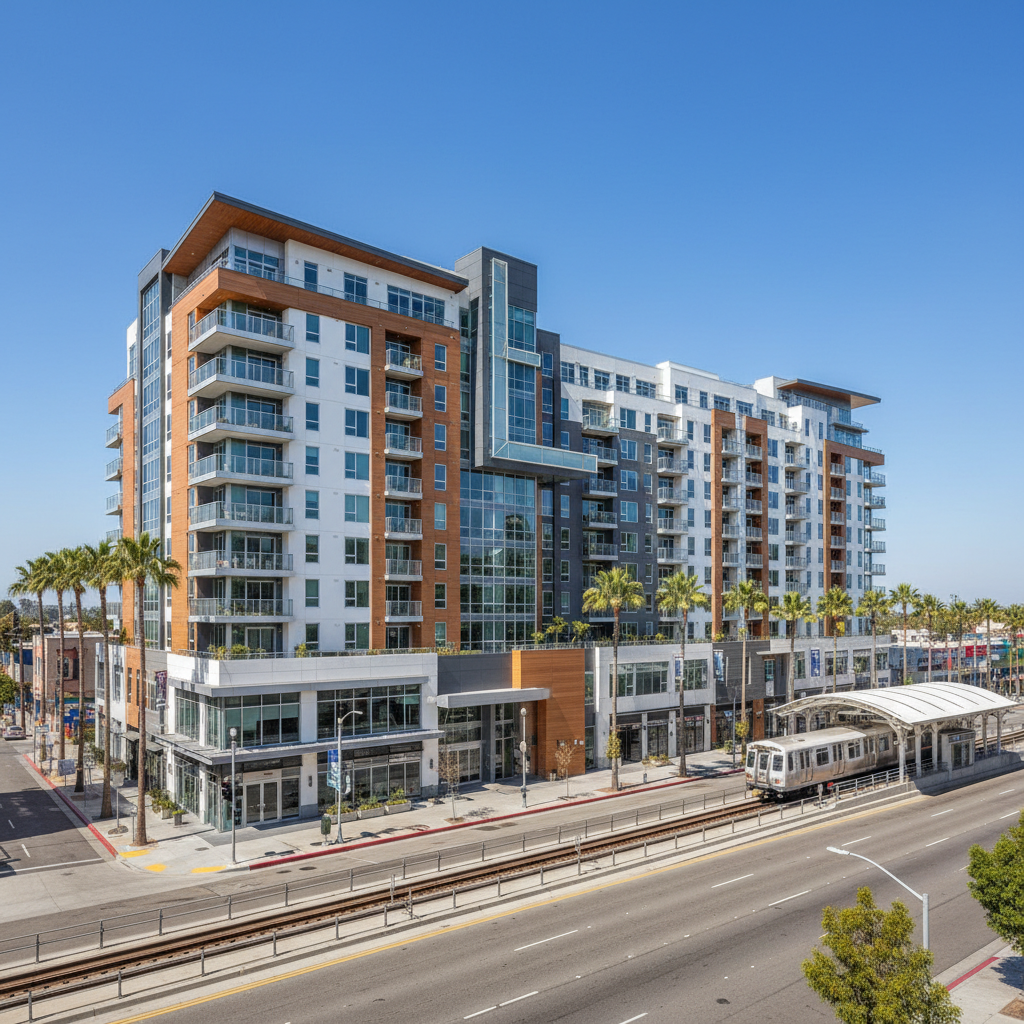
The Great Institutional Retreat: A New Era for Southern California Property Owners
As we navigate the first quarter of 2026, the Southern California real estate landscape is witnessing a tectonic shift. For years, massive Real Estate Investment Trusts (REITs) and institutional giants like Camden Property Trust dominated the high-density corridors of Los Angeles, Orange County, and San Diego. However, the tide has turned. Driven by a complex regulatory environment, compressed cap rates, and a surge in new 'luxury' supply that has softened rent growth, these Goliaths are beginning to liquidate their portfolios and exit the California market.
While some see this as a sign of market instability, the savvy private investor recognizes it for what it truly is: The Goliath Gap. As corporate entities retreat to more deregulated markets, they leave behind a massive service void. This vacuum creates an unprecedented opportunity for local property owners to cultivate niche dominance. By leveraging localized intelligence and high-touch management, private landlords can thrive in a market where distant, algorithmic-driven corporations are failing.
Identifying the Service Voids: Where Institutional Management Fails
Institutional REITs are built for scale, not for nuance. Their management models rely on standardized procedures, centralized call centers, and rigid policies that often alienate Southern California renters. As these entities pull back, the 'service voids' they leave behind become the primary entry points for private owners to capture high-quality tenants.
The Personalization Deficit
In a 2026 market where vacancy rates in the Inland Empire and Los Angeles have surged to five-year highs, the 'human element' has become a premium commodity. Institutional managers often treat maintenance requests and tenant communications as tickets in a queue. A private owner in Riverside or San Bernardino who offers a direct line of communication and a familiar face can immediately differentiate their property from the impersonal, corporate-managed high-rises nearby.
Deferred Maintenance and 'Portfolio-Wide' Neglect
As REITs prepare for liquidation, they often slash 'non-essential' expenses to bolster their balance sheets for sale. This results in a noticeable decline in curb appeal and preventative maintenance. Local owners who prioritize the physical integrity of their Class B assets can attract tenants who are fleeing the deteriorating conditions of neglected institutional buildings.
Counter-Programming: Competing with the 'Concession Wars'
In neighborhoods like the Irvine Spectrum and Downtown Los Angeles, brand-new luxury developments are currently engaged in 'concession wars,' offering up to three months of free rent to reach occupancy targets. For the independent landlord, competing on a dollar-for-dollar basis with these venture-backed high-rises is a losing game. Instead, the strategy must be counter-programming.
The Value of Stability Over Gimmicks
Savvy tenants in 2026 are becoming wary of the 'concession trap.' They understand that a lease with two months free often leads to a massive, unsustainable rent hike in year two. Private landlords can compete by offering transparent, stable pricing. By positioning your property as a long-term home rather than a temporary promotional stay, you attract 'sticky' tenants who value predictability over a one-time sign-on bonus.
Focusing on Retention through High-Touch Management
According to recent industry data, it is five times more expensive to acquire a new tenant than to retain an existing one. In a renter's market, retention is your greatest financial shield. At McIntire Kingstone, we advocate for a proactive retention strategy that includes:
- Pre-renewal Inspections: Identifying and fixing minor issues before the tenant even asks.
- Community Integration: Partnering with local businesses in Southern California cities to offer residents exclusive discounts.
- Responsive Upgrades: Offering long-term tenants vanity upgrades (new lighting, smart thermostats) upon lease renewal.
Repositioning Class B Assets: The ‘Community-Centric’ Alternative
The 2026 luxury high-rise is often criticized for being 'sterile.' These glass-and-steel boxes offer plenty of amenities but very little soul. This provides a golden opportunity for owners of Class B properties in areas like Long Beach, Pasadena, or the coastal enclaves of Orange County to reposition their assets as 'Community-Centric' alternatives.
Atmosphere as an Amenity
While you may not have a rooftop infinity pool, your Class B asset likely offers something the new high-rise doesn't: character and space. Use this to your advantage. Reposition common areas from 'dead zones' into functional community spaces. A small garden patch, a dog-friendly courtyard with actual grass, or a shared workspace with high-speed mesh Wi-Fi can outweigh a flashy gym in the eyes of a work-from-home professional.
Navigating Local Ordinances
Success in Southern California also requires a master-level understanding of local laws. With the City of Los Angeles frequently updating its Just Cause Eviction protections and the state-level AB 1482 rent caps, compliance is a core management function. Institutional REITs struggle with the localized complexity of California law; private owners who partner with expert management can navigate these hurdles with precision, ensuring that 'community-centric' doesn't mean 'legally vulnerable.'
Out-Maneuvering Algorithmic Pricing with Local Intelligence
Corporate competitors rely heavily on software like RealPage or Yardi to set their rents based on market averages. However, in a volatile 2026 market, these algorithms often lag behind the reality on the ground or fail to account for hyper-local micro-trends.
The Failings of the 'Black Box' Price
Algorithms often miss the impact of a new neighborhood park opening in San Diego or the closure of a major employer in the Inland Empire. By the time the software adjusts, the institutional owner has already lost weeks of occupancy. As a local owner, you have the advantage of 'feet on the ground.' You know which side of the street is more desirable and which local schools are driving demand.
Dynamic, Data-Driven Flexing
Instead of blindly following a software suggestion, use local market intelligence to offer 'flex' leasing options. If you notice a trend of healthcare professionals moving into the Inland Empire for short-term contracts, you can outperform the REITs by offering 9-month leases at a premium—something corporate structures often cannot approve quickly enough. This agility allows you to capture niche demand that the Goliaths simply ignore.
Financial Modeling for the 'Self-Sustaining Asset'
In 2026, the goal of property management has shifted from portfolio-wide volume to unit-level ROI. With higher interest rates and a stabilized rental market, owners must focus on making every square foot self-sustaining. This means navigating high vacancy rates by prioritizing quality and efficiency over sheer numbers.
Prioritizing Unit-Level ROI
When a unit becomes vacant in today's market, the instinct is often to drop the price immediately. However, if a
 .5B Bets on the SoCal Rent Silence" class="w-full h-40 object-cover transition-transform duration-300 group-hover:scale-105" loading="lazy"/>