The Institutional Afterglow: High-Touch Alpha as REIT Giants Recede
MK Property Management
August 11, 2026
9 min read
Share this article:
The Great Institutional Migration: Understanding the SoCal Void
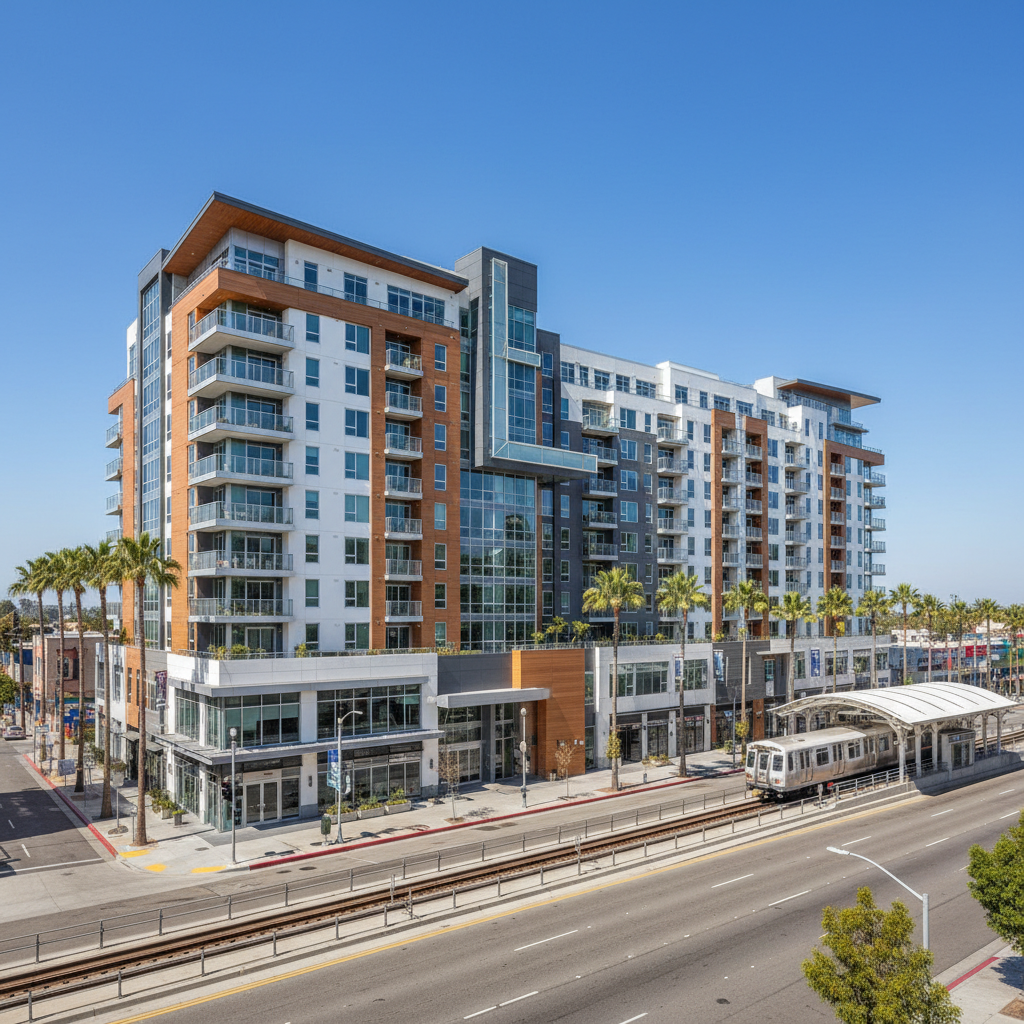
For the better part of a decade, the Southern California skyline—from the high-rises of Downtown Los Angeles to the luxury clusters of the Irvine Spectrum—has been dominated by institutional capital. Real Estate Investment Trusts (REITs) and massive private equity funds once viewed the California coast as an invincible fortress of appreciation. However, as of March 2026, the narrative has shifted fundamentally. Strategic exits by giants like Camden Property Trust and other institutional players have created what we at McIntire Kingstone call the “Institutional Afterglow”: a unique window where private capital can step into the vacuum left by corporate retreat.
Why are these giants pulling back? The intersection of mandatory retrofitting costs, complex local ordinances like Los Angeles’s Measure ULA (the “mansion tax”), and a cooling in post-pandemic migration has made the high-overhead corporate model less viable. While these large-scale entities thrive on uniformity and predictable global scale, they often struggle with the granular, localized nature of today’s Southern California renter’s market. This departure isn’t a sign of a dying market, but rather a realignment that favors the agile, high-touch private owner over the black-box algorithm of a distant corporation.
Identifying Vacuums in Specific SoCal Sub-Markets
The institutional retreat is not uniform. We are seeing the largest “voids” in specific corridors where entry pricing was highest and operational complexity has spiked. In Downtown Los Angeles (DTLA), a massive influx of brand-new inventory has coincided with a four-year low in rent prices. Institutional owners, burdened by rigid debt structures and the need to report quarterly earnings, are often unable to pivot their leasing strategies fast enough to compete.
Similarly, in the Inland Empire—specifically the hubs of Riverside and San Bernardino—the stabilization of the remote-work boom has led some institutions to trim their portfolios. For the private investor, these markets now offer opportunities to acquire modern, Class A-minus assets from exiting giants who are more focused on balancing their nationwide books than maximizing the potential of a single 50-unit complex in the Coachella Valley or Moreno Valley.
The Personalization Premium: Why 2026 Rewards High-Touch Management
In 2026, we have firmly entered a renter’s market. With vacancy rates across Southern California hitting five-year highs, the modern tenant no longer settles for a sterile, corporate living experience. The “Personalization Premium” is the measurable increase in retention and rent growth that occurs when a property is managed with local nuance rather than a standardized manual printed in a different state.
The Failure of the 'Black-Box' Algorithm
Many REITs rely on automated pricing algorithms that adjust rents daily based on market data. In a volatile market like the one we are seeing in Orange County or San Diego, these algorithms often fail to account for the human element. They might suggest a
00 rent hike during a lease renewal simply because a new luxury building opened three blocks away, ignoring the fact that the current tenant is a reliable, long-term resident who values stability.
Private owners, supported by a professional property management partner like McIntire Kingstone, can leverage “High-Touch Alpha.” This means having the flexibility to offer bespoke renewal incentives—such as a tailored appliance upgrade or a dedicated parking spot—that an algorithm wouldn’t consider. In 2026, the cost of a one-month vacancy in a Los Angeles apartment often exceeds the cost of a localized retention strategy by 300%.
Agility in the Face of Local Regulation
Managing property in California requires navigating a labyrinth of laws, including AB 1482 (the California Tenant Protection Act) and various local rent control measures. Corporate giants often apply the most restrictive common-denominator rules across their entire portfolios to mitigate risk, which can stifle revenue. Agile private owners can operate more precisely within the law, utilizing legal “just cause” provisions and exemption statuses for certain types of housing that large REITs typically overlook due to the scale of their operations.
Counter-Cyclical Acquisition: Picking Up Class A Assets
As institutional giants recede, a rare window has opened for the acquisition of high-quality inventory at compressed cap rates. We are currently seeing a trend of “Institutional Hand-offs,” where private syndicates and individual high-net-worth investors are acquiring buildings that were previously considered “unreachable.”
Targeting the 'Effort Gap'
When an institution sells, they are often selling an asset that has been “managed by spreadsheet.” These properties frequently suffer from an “effort gap”—deferred maintenance that doesn't show up on a P&L statement but affects the tenant experience. By identifying Class A assets in prime locations like Santa Monica, West Hollywood, or coastal San Diego that have been poorly optimized by corporate management, private owners can apply targeted capital improvements to unlock significant value.
Strategy 1: Niche Repositioning. Take a corporate-owned building with high turnover and rebrand it to serve a specific local demographic, such as healthcare professionals near the Long Beach medical corridor.
Strategy 2: Expense Harvesting. Corporate overhead often includes redundant security contracts and bloated vendor fees. A local owner can renegotiate these using regional relationships, immediately improving the Net Operating Income (NOI).
Strategy 3: Flexible Leasing. Institutions often have 12-month-only lease mandates. Private owners can capitalize on the 2026 “gig economy” by offering 9-month or 15-month leases to align with local university schedules or film industry cycles.
Operational Arbitrage: Outperforming the Giants
Operational arbitrage is the practice of generating higher returns by running a property more efficiently and creatively than the previous institutional owner. In the 2026 SoCal market, this is achieved through local knowledge and streamlined decision-making.
Hyper-Local Knowledge vs. Broad Data
A REIT headquartered in Houston or Chicago views a property in Riverside as a data point in a “Western Region” bucket. They may not realize that a specific street in Riverside is about to benefit from a new transit hub or a localized zoning change. Private owners who live and breathe the Southern California market can make proactive investments based on these “boots-on-the-ground” insights before they reflect in the macro-data used by institutional competitors.
The Efficiency of Streamlined Overhead
Institutional management fees are often just the tip of the iceberg; there are also regional management layers, corporate compliance costs, and expensive technology stacks that the tenant eventually pays for through higher rents. By removing these layers, private owners can reinvest that saved capital back into the property. This creates a cycle of improvement: the property looks better, the tenants are happier (leading to higher retention), and the owner’s margin increases even if they keep rents slightly below the “corporate” rate to maintain 100% occupancy.
Practical Action: The 'Amenity Audit'
We recommend all our clients perform an “Amenity Audit” in 2026. Institutional buildings often waste money on flashy amenities that residents don’t use (like expensive, high-maintenance water features) while neglecting what 2026 renters actually want: secure touchless entry, EV charging stations, and dedicated high-speed home office nooks. Switching budget from “corporate fluff” to “functional modernism” is a primary driver of alpha in the current cycle.
Reinvesting the Efficiency Gap for Maximum Retention
With vacancy rates rising, retention is the new growth. The cost of acquiring a new tenant in Southern California—including marketing, repairs, and concessions—is at an all-time high. By utilizing the higher margins gained from leaner, local management, private owners can fund the specific upgrades that keep residents from moving to the brand-new “concession-heavy” building down the street.
The 2026 Tenant Experience
What drives retention in the current Southern California climate? It is no longer just the pool or the gym. It is the quality of the interaction. When a tenant in an Orange County apartment has a plumbing issue, a high-touch private manager responds in hours, not through a centralized ticketing system that takes days to process. This human connection creates a sense of “home” that is increasingly rare in a world of institutional ownership.
Investing in Sustainability and Small Wins
As property taxes and insurance premiums continue to be a point of political contention (with some even debating the future of property taxes in California to alleviate wealth-tax burdens), savvy owners are focusing on internal efficiencies. Upgrading to low-flow water systems, LED lighting, and solar-assisted common areas reduces the utility burden for both the owner and the tenant. In 2026, a “green-certified” private building in San Diego can often command a 5-8% rental premium over a standard corporate-run peer.
Summary of Actionable Strategies for SoCal Landlords:
Watch the REITs: Track the disposition lists of major REITs to find Class A-minus assets in secondary SoCal markets like the Inland Empire or Long Beach.
Lean into Flex-Terms: Use the rigidity of corporate 12-month leases against them by offering variable lease terms that fit the Southern California lifestyle.
Localize Your Vendor Base: Break away from national corporate contracts and use local Southern California contractors who provide better service at more competitive rates.
Personalize the Renewal: Instead of a flat percentage increase, offer “choice-based” renewals where tenants can choose an upgrade (new floors, smart locks, or a month of free parking) in exchange for a longer lease commitment.
Conclusion: The Era of the Intelligent Private Owner
The transition we are witnessing in 2026 is not a decline of the Southern California real estate market, but a maturation. The “Institutional Afterglow” offers a period where the lessons of corporate efficiency can be married with the power of local agility. For the private investor, the exit of the giants isn’t a warning—it’s an invitation. By focusing on high-touch management, strategic counter-cyclical acquisitions, and a deep commitment to the tenant experience, Southern California property owners can harvest significant “alpha” in a market that rewards those who truly understand the ground they stand on.
At McIntire Kingstone, we specialize in helping property owners capitalize on these market shifts. Whether you are looking to acquire an institutional-grade asset or simply want to optimize your current portfolio for the 2026 renter’s market, our experts are here to guide you through the complexities of the California landscape. Let’s turn the institutional void into your investment advantage.
MK Property Management
The McIntire Kingstone team brings decades of combined experience in property management, real estate investment, and tenant relations.

 .5B Bets on the SoCal Rent Silence" class="w-full h-40 object-cover transition-transform duration-300 group-hover:scale-105" loading="lazy"/>